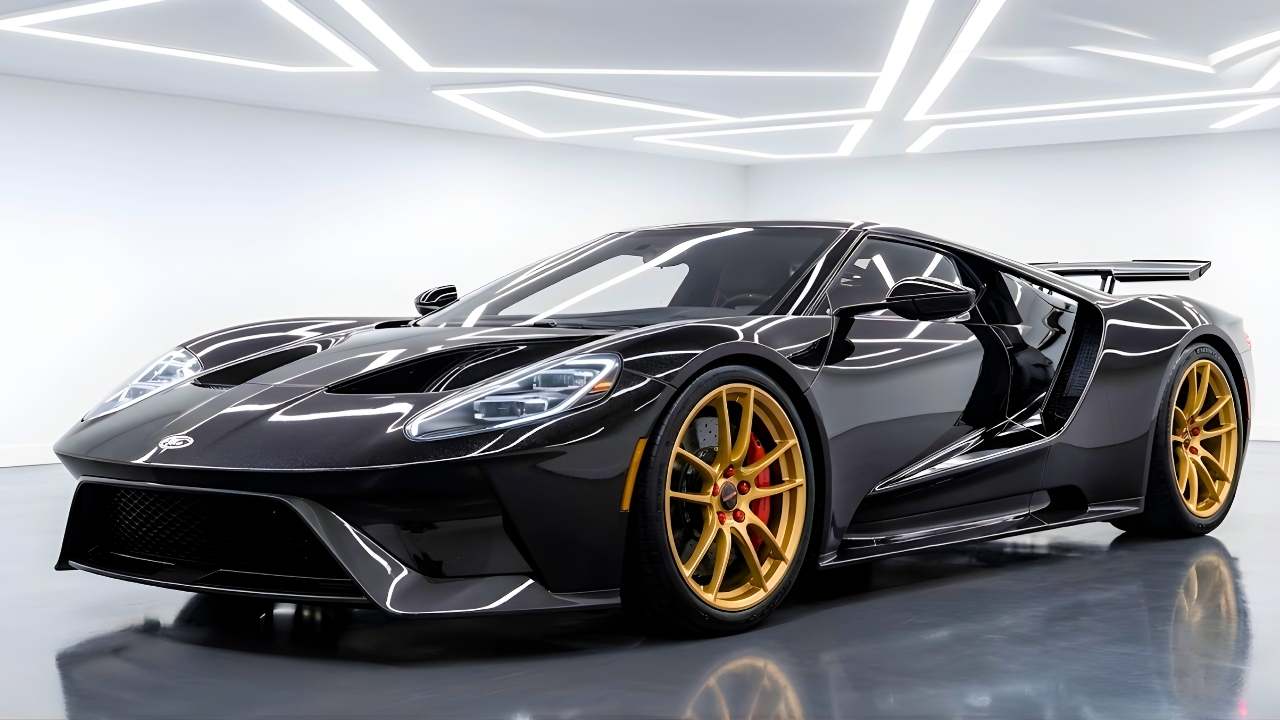
2026 Ford GT: The 2026 Ford GT continues its legacy as a race-inspired supercar, combining extreme aerodynamics with lightweight construction and track-focused engineering. It remains one of the most performance-oriented machines in Ford’s lineup.
With a focus on precision, speed, and driver engagement, the 2026 Ford GT delivers a highly specialized driving experience shaped by motorsport development.
Engine Configuration and Performance Output
The supercar is powered by a twin-turbocharged EcoBoost V6 engine, with outputs ranging from around 660 hp in earlier versions to over 800 hp in track-focused variants.
Advanced tuning and lightweight construction allow rapid acceleration, with 0–100 km/h times close to 3 seconds and top speeds exceeding 340 km/h.
Aerodynamics and High Speed Efficiency
The GT’s design is shaped primarily by aerodynamic performance, featuring a teardrop profile, active rear wing, and large air channels.

These elements generate significant downforce, improving stability and grip during high-speed driving and track use.
Specifications Overview
| Specification | Details |
|---|---|
| Engine Type | Twin-Turbo EcoBoost V6 |
| Power Output | 660 – 800+ hp |
| Transmission | Dual-Clutch Automatic |
| Drivetrain | Rear-Wheel Drive |
| 0–100 km/h | ~3.0 seconds |
| Top Speed | 340+ km/h |
| Body Type | High-Performance Supercar |
Exterior Design and Aggressive Styling
The 2026 Ford GT features a low-slung stance with a wide body and sculpted panels. Large air intakes and aerodynamic tunnels define its visual identity.
Carbon fiber construction not only reduces weight but also enhances structural rigidity and performance capability.
Interior Layout and Driver Focus
The cockpit is built around the driver, with a fixed seating position and adjustable pedals and steering wheel to optimize driving ergonomics.

Minimalist design reduces distractions, allowing the driver to focus entirely on performance and control.
Infotainment and Digital Interface
A compact digital instrument cluster displays critical performance data such as speed, gear position, and telemetry.
Infotainment features are intentionally limited, prioritizing driving engagement over luxury-focused systems.
Suspension System and Handling Precision
The GT uses advanced suspension technology, including pushrod systems and adaptive dampers, to deliver precise handling.

Low ride height and optimized weight distribution enhance cornering ability and stability.
Safety Systems and Performance Control
The vehicle includes advanced traction control, stability management, and high-performance braking systems.
These systems are tuned for track conditions, providing maximum control during aggressive driving.
Fuel Efficiency and Performance Focus
Fuel efficiency is not a primary concern, as the GT is engineered for performance rather than economy.

However, the compact V6 engine offers better efficiency compared to larger displacement alternatives.
Practicality and Everyday Usability
The Ford GT offers minimal practicality, with limited storage space and a focus on two-seat configuration.
It is designed primarily for performance enthusiasts rather than daily commuting.
Technology Integration and Smart Features
Advanced telemetry systems allow drivers to monitor performance metrics and optimize driving techniques.

Selectable driving modes adjust suspension, power delivery, and aerodynamic settings.
Market Position and Exclusivity
The 2026 Ford GT remains a limited-production supercar, emphasizing exclusivity and high performance.
Its motorsport-inspired engineering and unique design place it among elite performance vehicles globally.