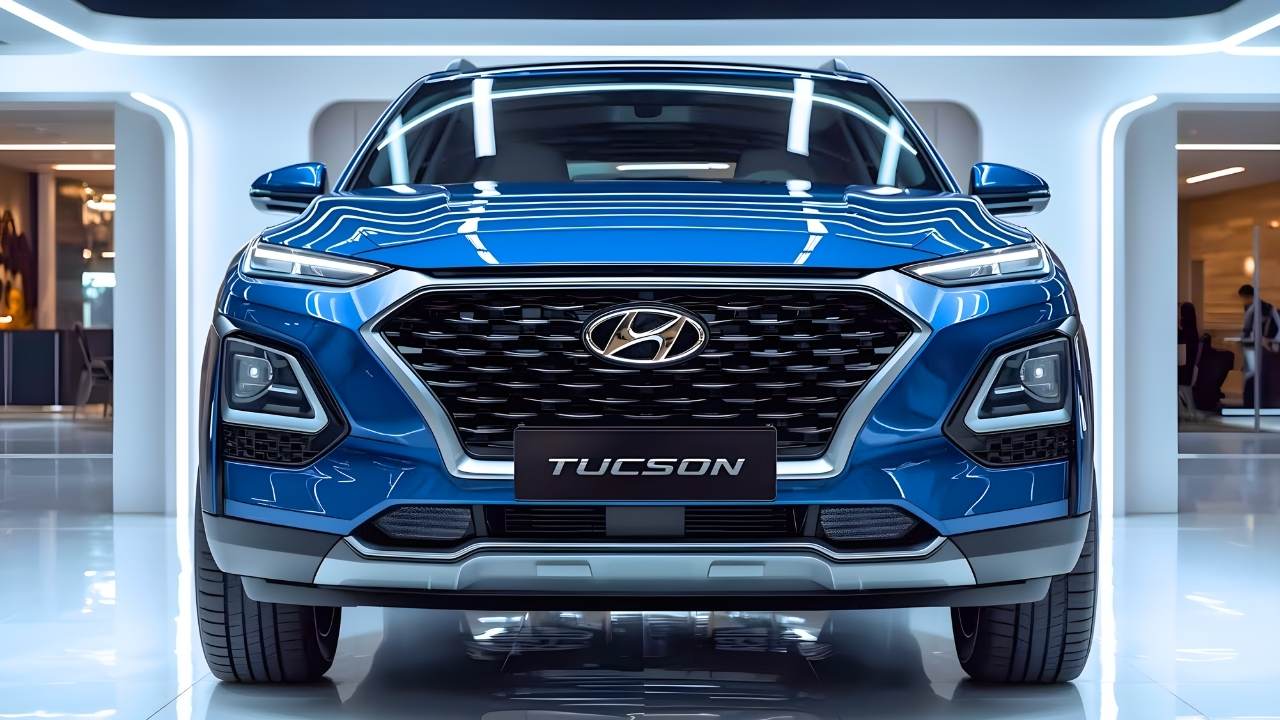
2026 Hyundai Tucson: The 2026 Hyundai Tucson continues to strengthen its position in the compact SUV segment with a focus on comfort, efficiency, and technology. It combines updated styling with practical features suited for daily use.
With multiple powertrain options and improved safety systems, the 2026 Hyundai Tucson delivers a refined driving experience while maintaining strong value across its lineup.
Powertrain Options and Performance Capability
The SUV offers a standard 2.5-litre petrol engine producing around 187 hp, paired with an 8-speed automatic transmission. It is tuned for smooth and predictable performance in both city and highway conditions.
Hybrid and plug-in hybrid variants are also available, delivering higher output up to 231 hp while improving efficiency. These versions provide stronger acceleration and better overall responsiveness.
Ride Comfort and Driving Refinement
The suspension setup is designed to prioritize ride quality, absorbing road imperfections effectively. This makes the SUV suitable for long-distance travel as well as daily commuting.
A well-balanced chassis and available all-wheel-drive system enhance stability and control. The overall driving experience remains composed even on uneven surfaces.
Specifications Overview
| Specification | Details |
|---|---|
| Engine Options | 2.5L Petrol / Hybrid / PHEV |
| Power Output | 187 – 231 hp |
| Transmission | 8-Speed Automatic / 6-Speed AT |
| Drivetrain | FWD / AWD |
| Fuel Efficiency | 25–33 MPG (Petrol) / ~36 MPG Hybrid |
| Seating Capacity | 5 |
| Cargo Capacity | Up to ~80 cu.ft (max) |
| Body Type | Compact SUV |
Exterior Styling and Modern Design Language
The Tucson features a bold front design with a parametric grille and integrated LED lighting. Sharp body lines and a sculpted profile give it a modern and distinctive appearance.
The rear design includes connected lighting elements and a clean tailgate layout. Its proportions strike a balance between urban practicality and road presence.
Interior Space and Cabin Experience
The cabin offers a spacious layout with seating for five and generous legroom. High-quality materials and a clean dashboard design enhance the overall feel.
Cargo space is practical, with up to around 80 cubic feet available when rear seats are folded. This makes it suitable for both daily use and longer trips.
Infotainment and Connectivity Features
A 12.3-inch touchscreen infotainment system is standard across the range, supporting wireless Apple CarPlay and Android Auto.
Additional features include digital instrument displays, navigation, and connected car technology. The interface is designed for intuitive use with minimal distraction.
Safety Systems and Driver Assistance Technology
The SUV is equipped with Hyundai SmartSense, offering features such as forward collision avoidance, lane-keeping assist, and adaptive cruise control.
Advanced systems like blind-spot monitoring, surround-view camera, and remote parking assist enhance safety and convenience in various driving situations.
Fuel Efficiency and Hybrid Advantage
Petrol variants deliver around 25–33 MPG depending on drivetrain configuration. This ensures competitive efficiency within the segment.
Hybrid models improve fuel economy further, reaching approximately 36 MPG combined. Plug-in hybrid versions also offer electric-only driving capability for short distances.

Practicality and Everyday Versatility
The Tucson offers a flexible interior with foldable rear seats and multiple storage compartments. This enhances usability for both passengers and cargo.
Towing capability of up to around 2,750 lbs adds to its practicality, allowing it to handle light utility tasks alongside everyday driving needs.
Pricing Range and Variant Positioning
The 2026 Tucson lineup is expected to start from around $29,000 and extend beyond $39,000 for higher trims. This positions it competitively within the compact SUV category.
Different trims cater to varying requirements, from basic daily usability to premium features and enhanced comfort.
Competitive Landscape and Segment Rivals
The Tucson competes with models such as the Toyota RAV4, Honda CR-V, and Mazda CX-5. Each rival offers its own mix of performance, efficiency, and features.
Its combination of modern design, hybrid efficiency, and advanced safety systems helps it stand out in a highly competitive segment.